
Lee County Arrest News Sources
No Lee County newsroom publishes a full arrest list. Coverage here is selective. The weekly Ledger comes closest to a routine source, printing sheriff activity summaries and Smithville council reports on a steady cycle. WALB's Lee County section is the best current landing page for county-specific stories, mixing event coverage with the occasional agency-supplied photo. When a case draws wider notice, the Albany Herald and WGXA step in with regional reporting.
Official sources work differently. Citizen Connect splits bookings from arrests in its Daily Report, and the Inmate Confinements screen shows who is in custody now plus recent admissions. A news story is great for pinning down a date or an agency name. For the actual booking record, though, go to the official card or a records request. The court docket is where amended charges and dismissals live.
Skip the news, check the court file. A story can report booking charges accurately and still be overtaken later by a reduction or dismissal. Read the docket before you conclude anything.
Lee County News Outlet Table
The table puts every local outlet in one spot. It shows what each can and cannot prove. A photo attached to a story might be a booking release. It could be a wanted notice, a scene shot, or an old file image. Read the caption closely. Note which agency supplied it.
| Outlet | Coverage | Photos? | Where to look |
|---|---|---|---|
| Lee County Ledger | Weekly county activity and Smithville police council reports | Reviewed activity items were narrative, not a systematic mugshot gallery | Current paper and searchable issue archive |
| WALB News 10 | Current Lee County events and major incidents | Sometimes agency-supplied or story-specific images | Lee County vertical and Crime page |
| Albany Herald | Regional, event-driven reporting, including Smithville investigations | Story-specific scenes or supplied images | Local news |
| WGXA | Regional television coverage when an event warrants | Occasional supplied law-enforcement images | Local section and Lee County topic search |
| Lee County Sheriff’s Office | Official activity, custody, and public-safety information | Citizen Connect cards may display booking photos | Sheriff’s Office and its county-linked Citizen Connect tools |
| Busted Newspaper | Unofficial county-local photographed entries | Publisher displays photos | Lee County section, not a city police feed |
| Recently Booked | Unofficial recent county page | Publisher displays photos | Lee page, with stated coverage that must be verified |
| Mugshots.com | Apparently historical or irregular county archive | Publisher displays photos | Lee County archive, not a current-custody source |
| The Georgia Gazette | Unofficial active-looking county entries and local news category | Publisher displays photos | Lee landing page and Lee County news |
Lee County Ledger Activity Trail
The Ledger offers something the jail interface never will: a running local archive. Its recurring "Lee County Sheriff's Office Issues Activity Report" items summarize selected incidents with dates, locations, deputies, and named charges. The paper also preserves Smithville police council reports. Those reports tally citations, warnings, warrants, arrests, tows, and K9 activity in the aggregate, so they won't work as a person-level arrest search.
One Smithville report dated May 29, 2024 counted 131 citations, 73 warnings, seven warrants, seven arrests, and eight tows for its reporting period. Those are council-report totals. They name no one, show no booking photo, and don't confirm that each event ended in a Lee County jail admission. A March 1, 2023 report follows the same pattern.
The archive earns its keep when a current story has moved or a Daily Report date label is tough to read. Treat the paper as a secondary source. Keep the issue date handy, then compare names and dates against Citizen Connect and the court file.
WALB and Regional Lee County News
WALB’s Lee County page is the strongest current landing page found in the research. It is event-driven, so the pace changes with the news cycle. A story may identify the Lee County Sheriff’s Office, Leesburg Police Department, GBI, a prosecutor, or a court record. Its broader crime page mixes jurisdictions and should not be mistaken for a Lee-only archive.
Albany Herald adds regional context, including Smithville investigations and interagency work. WGXA’s current local section is useful when a regional television story reaches the case, but the brand and URL history is less stable. Neither outlet is a full roster. A photograph can be a scene image or a supplied law-enforcement image rather than the county booking portrait.
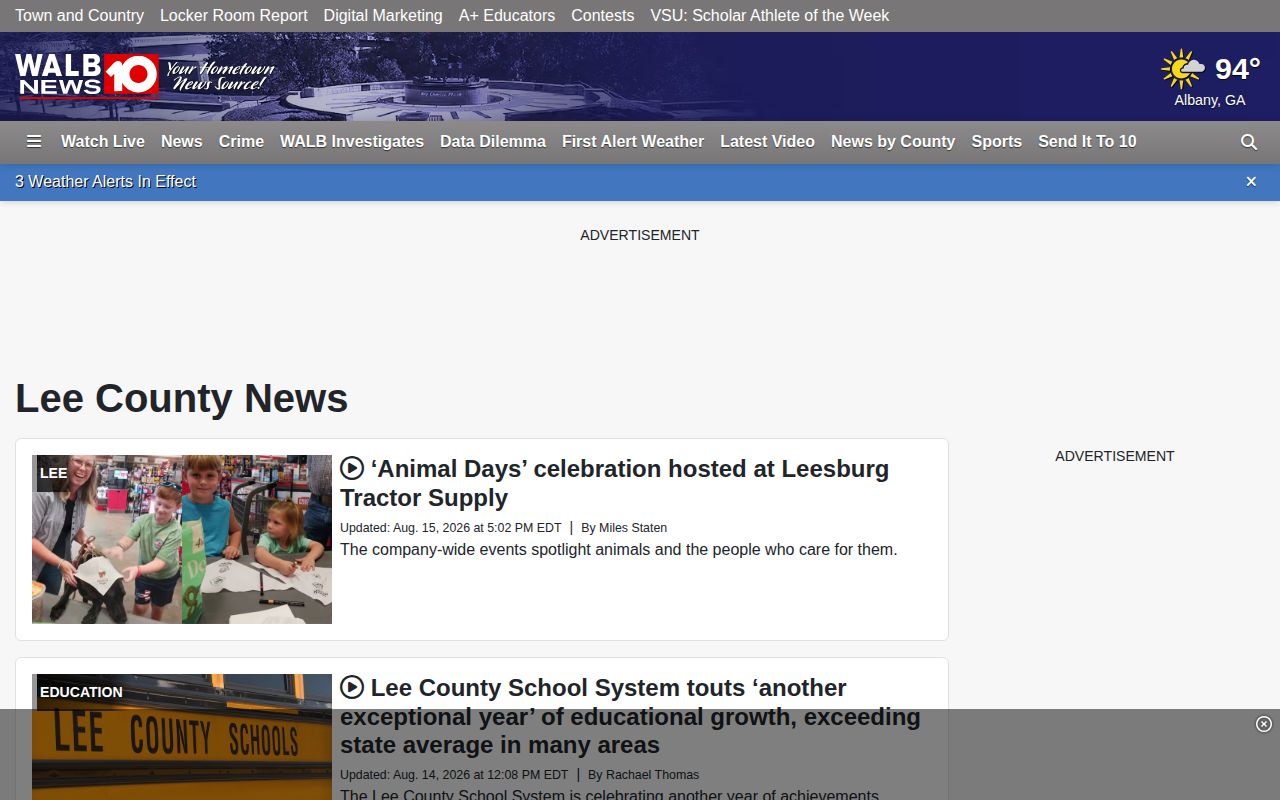
The WALB capture documents a current Lee-specific news route. It does not establish that every arrest receives coverage or that every story includes a booking photo.
How Lee County Photos Reach News
Photos reach newsrooms through several doors: an agency release, a public-records request, an official wanted notice, or a source handed to a reporter. Georgia law plays a role too. O.C.G.A. § 35-1-19 governs how agencies post booking photos and what requesters must affirm, and it bars transfer to publications that charge to remove a photo. A picture in a story tells you nothing about which door it came through.
Lee County's Citizen Connect cards do display booking photographs. The local newsrooms don't run any systematic gallery, though. The Ledger's activity reports are pure narrative. WALB stories lean on video or agency images. Commercial pages can copy a public photo and still stay incomplete or stale. Check custody in the county system rather than counting news images online.
When a source corrects itself later, the fix should name the exact field or outcome that was wrong. A corrected release doesn't erase the original booking entry. A dismissal or restriction order from a court is a different kind of update, and it belongs next to the original record, not in place of it.
From Lee County News to the Record
A story hands you the clues you need: person, date, agency, location, and the event itself. Work through them in order. And a failed search never proves that nothing happened.
- Save the story URL and publication date. Note the exact name, agency, arrest date, and charge wording.
- Check the official Daily Report Arrests or Bookings tab, then Current Confinements or the admission windows if present custody matters.
- Use the county booking record or a Sheriff’s Office open-records request for the intake fields and photograph. The Lee County search and records path separates these custody channels.
- Search PeachCourt or ask the Superior Court clerk for filed case information and later docket events.
- Read the disposition. If a final outcome was not located, say so instead of describing the booking charge as a conviction.
Keep each record stage separate. A news story, a booking card, an arrest report, a court docket, and a state offender profile can all describe one person. Each one catches a different moment. They also use their own terms for the same case. So don't expect the wording to match across them.
What if a story says "arrested" but the roster is empty? There are several ordinary reasons. The person may have been released, cited, transferred, or booked by another agency. The date filter may simply be set to the wrong window. Run the arrest search and the records-request route before deciding what happened.
Lee County First Appearance Timing
Lee County Magistrate Court handles first appearances, bond, preliminary hearings, extradition, committal matters, and warrant functions. Georgia Uniform Magistrate Court Rule 25.1 describes judicial presentation no later than 48 hours after a warrantless arrest or 72 hours after an arrest under warrant unless bond has been made. Those limits describe the court handoff, not a guaranteed time for a booking photograph or a news story to appear online.
That timing helps explain why a story, jail card, and court file can arrive in a different order. A reporter may publish an agency statement before a docket entry is easy to find. A person may be released while the admission result remains available. A first appearance can record early bond information while the final charging document and disposition come later.
Use the Lee County Magistrate Court page for the local contact route, then follow the Superior Court file or PeachCourt for the later case record. Keep the initial allegation, hearing event, and final outcome labeled as separate facts.
Unofficial Lee County Mugshot Pages
Commercial local sections belong after the official channels. They can help locate a story clue or an old post, but they may duplicate records, omit dispositions, use irregular dates, or show someone who is no longer in Lee County custody. They are not affiliated with the Lee County Sheriff’s Office and do not replace the court.
The verified Busted Newspaper Lee County section presents a chronological-looking photographed stream. Its county label does not make it a Leesburg or Smithville police feed.
The screenshot documents the county-local section as a secondary publication. It should be checked against Citizen Connect before any custody statement is made.
The Recently Booked Lee page advertises a recent window and publisher refresh claims. Those claims are not a guarantee from the sheriff, and the page can continue to show a person after release.
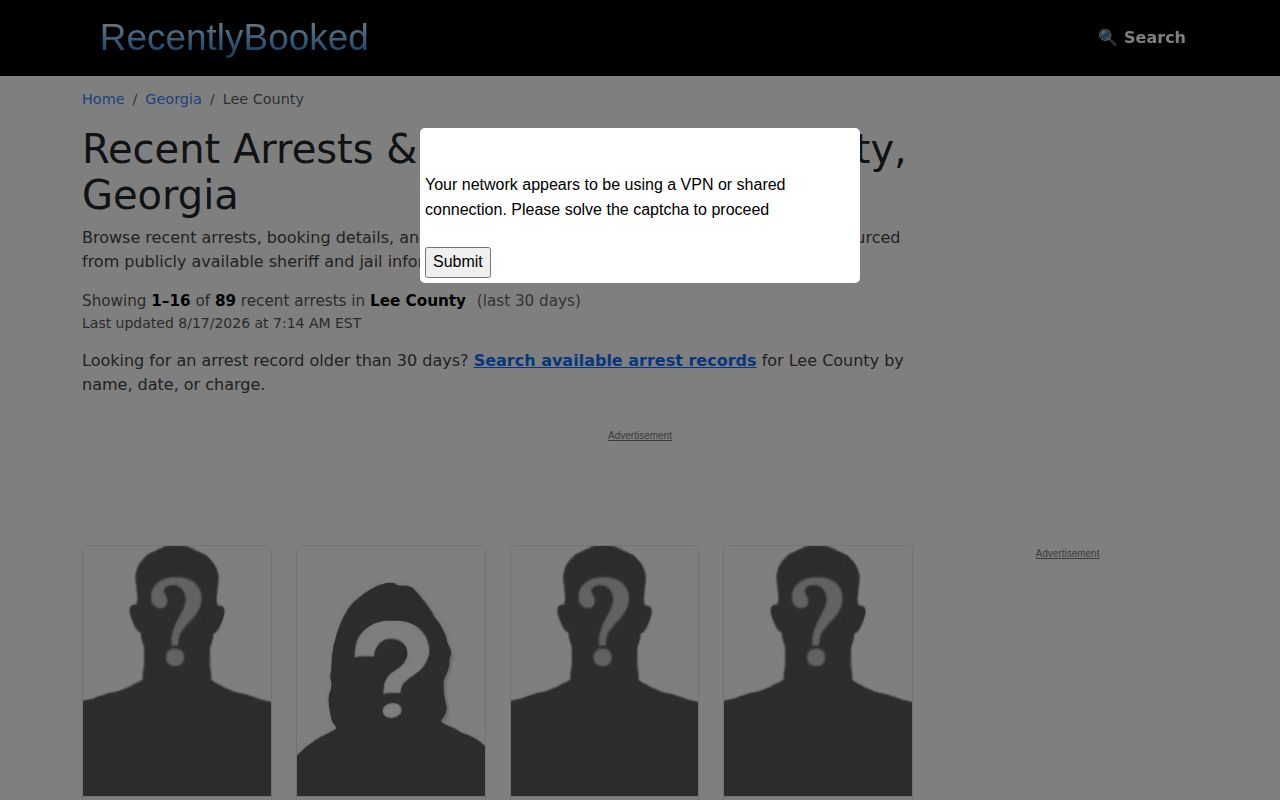
The image shows the publisher’s local presentation, not an official roster. Confirm the booking number, date, and custody stage through the county source.
The Mugshots.com Lee County archive appeared historical or irregular rather than a dependable recent feed. The Georgia Gazette Lee section appeared active, but it is also unofficial and may not carry a disposition.
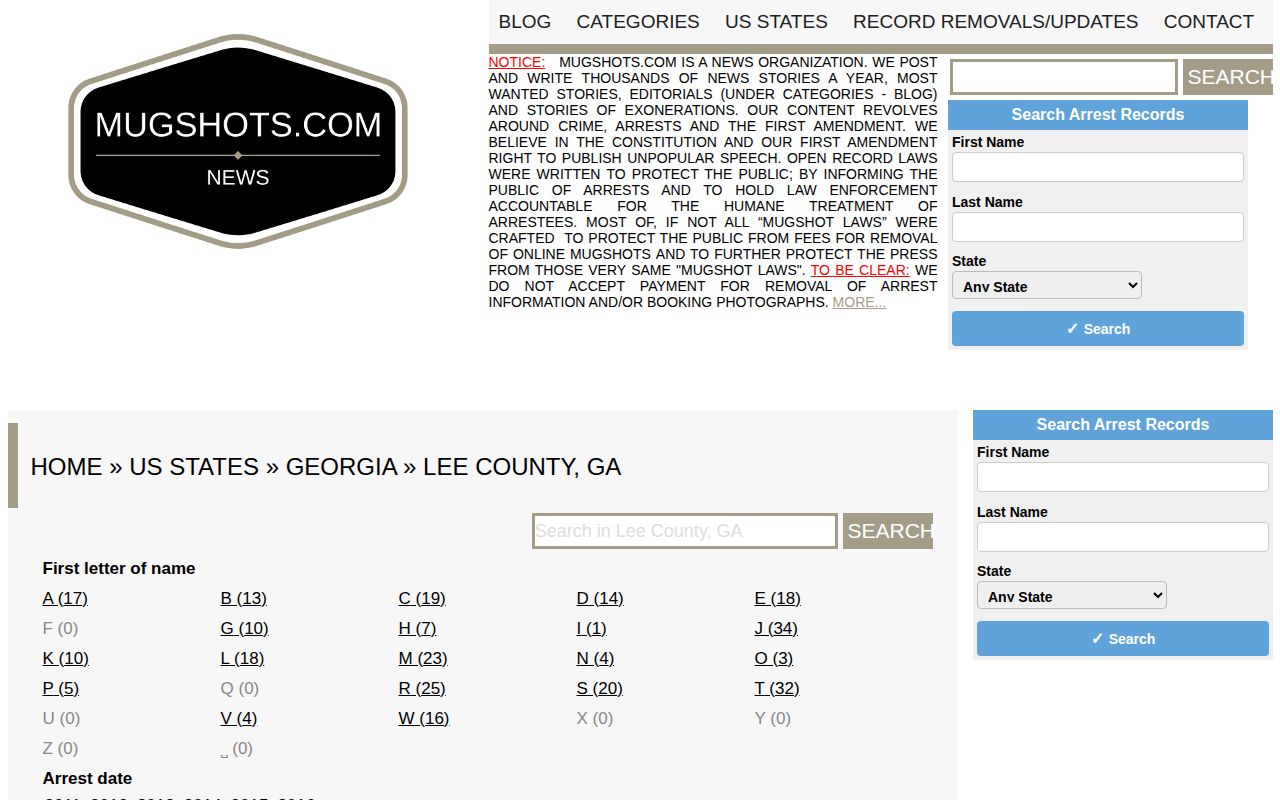
The Mugshots.com capture is useful for understanding why apparent age and current custody should not be conflated.
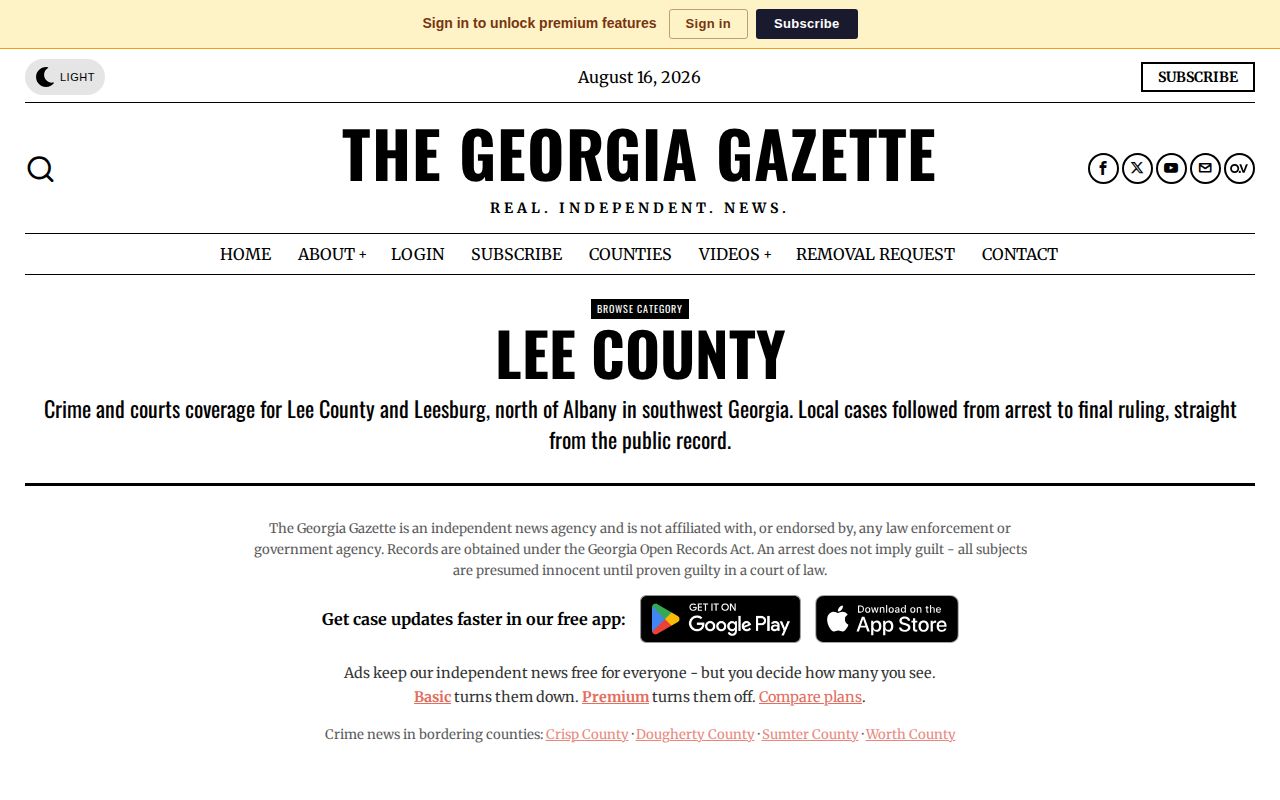
The Georgia Gazette capture documents another secondary local section. None of these publishers should be treated as an official source or copied into a photo gallery.
Leesburg and Smithville News
Neither Leesburg nor Smithville has a verified city arrest feed. Leesburg Police offers an Accident/Incident Report link, but no public blotter, daily bulletin, or booking feed at the person level. Its school-zone camera program generates traffic and civil records, which are not jail bookings. Smithville's Police department checks out as current, though older sources describe a time when only the sheriff covered the area. For any custody question, current city contacts and the county booking system should lead.
Two companion pages sort this out. Leesburg Busted Mugshots walks through the city police, the school system's role, and where county bookings end up. Smithville Busted Mugshots separates the city's monthly Ledger reporting from a person-level booking search. Both point back to Citizen Connect and the Sheriff's Office.
The Lee County Criminal Justice Center, run under Sheriff Reggie Rachals, handles local custody. Once a sentence and transfer occur, the Georgia Department of Corrections offender query takes over at the state level and may show an offender photo when one exists. Regional news can flag that an event happened, but city jurisdiction, arresting agency, county admission, and court disposition each deserve their own check.