
Inside Lee County Busted Mugshots
A Lee County booking photo is simply the identification picture taken when someone enters the county jail in Leesburg. The Lee County Sheriff's Office runs that facility, the Criminal Justice Center. Around the photo sits a booking record. It lists the person's name, booking number, arresting agency, admission time, charges as entered at intake, and bond details when the jail fills those fields in. Think of it as an arrest receipt. It documents an event, nothing more.
Custody follows a path with clear steps. An officer or another agency makes the arrest. The person gets booked at the Criminal Justice Center, where staff attach the photo and create the record. The public roster may then show a current confinement or a fresh admission. Court hearings and outcomes land in a separate judicial file. Someone can walk free while the booking record stays on file, and a transfer to state or federal custody shifts any further search to a different system entirely.
A booking photo is just a snapshot. It shows one moment, nothing more. For case details, the court record is where to look.
Lee County Busted Booking Fields
The live Citizen Connect cards give you more than a name. They help you tell apart people who share one. They also separate an arrest time from a jail admission time. Some fields stay blank. A missing bond amount does not mean no bond exists, and not every card promises a court date or a facility entry.
The charges field shows what was recorded at intake. A booking number belongs to the confinement record. A court case number belongs to the judicial file. And the arresting agency named in the jail data is just the agency credited there, not necessarily the prosecutor or court that later handles each count.
| Field | What it shows |
|---|---|
| Booking number and name | The jail’s identifier and the person’s name as entered for the confinement record. |
| Booking photograph | The identification image displayed by the county-linked public card when one is available. |
| Age, race, and sex | Demographic labels shown by the portal, used with care because a name match alone is not enough. |
| Booked date and time | When the person was admitted to the local jail record. |
| Arrest date and time | When the recorded arrest event occurred, which can differ from booking time. |
| Arresting agency | The law-enforcement agency associated with the arrest data on the card. |
| Total bond | The bond total when the card has one. A blank value needs confirmation from the court or custodian. |
| Charges and docket or bond details | The intake charges and related details when the portal has populated them. They are not a final disposition. |
Getting Lee County Busted Records
Start at the Lee County open-records page. It routes sheriff, arrest, and police-report requests straight to the Sheriff's Office. The records address is 119 Pinewood Road, P.O. Box 610, Leesburg, GA 31763. The main line is (229) 759-3334. No sheriff-specific online form or dedicated records email appears there, so call the custodian first to confirm the current submission method.
Be specific in your request. Give the person's name, the approximate arrest or admission date, and the arresting agency if you know it. Then ask item by item: the booking sheet, the booking photograph, admission and release dates, charge and bond fields as recorded, and any incident or arrest report. A jail record does not automatically include the full incident report or the court file. A focused request helps the custodian spot what is held and what may be exempt.
- Identify the full name, approximate event date, and any booking number or agency detail that can narrow the search.
- Address the request to the Lee County Sheriff’s Office at the Pinewood Road address or use the submission method confirmed by phone.
- List the booking record and photograph as separate requested items, and include the truthful affirmation required by O.C.G.A. § 35-1-19 for a booking-photo request.
- Ask for electronic delivery and a written estimate before costs above the amount you can approve.
- If material is withheld, request the specific statutory exemption and the expected production time for any releasable portion.
Records contact. Lee County Sheriff's Office, Criminal Justice Center, 119 Pinewood Road, Leesburg, GA 31763. Main: (229) 759-3334. County-listed non-emergency: (229) 759-6012. Fax: (229) 759-3331. County office hours run Monday through Friday, 8 a.m. to 5 p.m.
The official request-routing page shows how the sheriff records path is separated from the county’s general clerk channel.
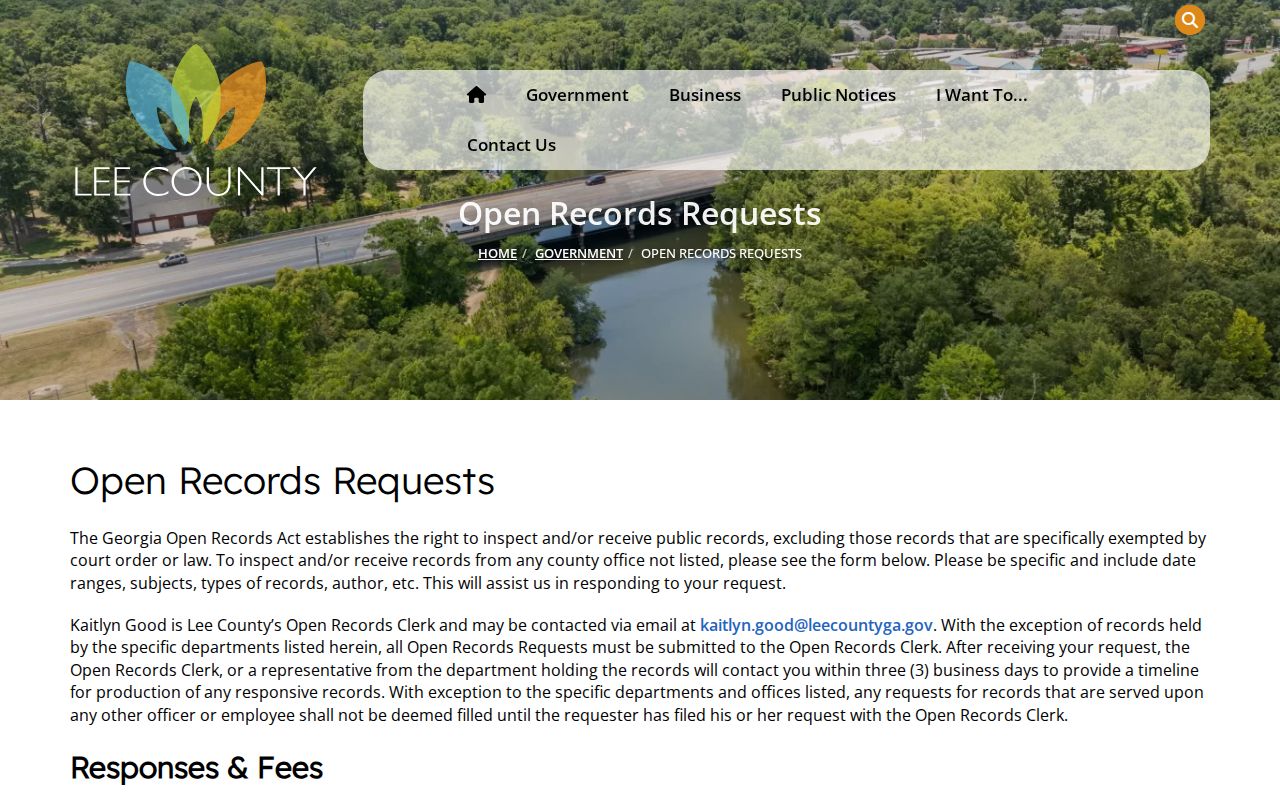
The captured county page supports the sheriff-first route and lists the local copy and labor rules. It does not create a promise that a booking photo has a separate published price.
Georgia Mugshot Law
Georgia's Open Records Act starts from broad access to existing agency records, but exemptions and special rules shape what a custodian can hand over. The Georgia Attorney General's open-government guidance treats photographs and computer-generated material as public-record forms. Protected portions can still be withheld under specific legal authority. Initial arrest and incident reports get their own treatment while an investigation is pending.
Booking photos have a separate statute, O.C.G.A. § 35-1-19. A requester must make the statutory affirmation. An agency cannot release a photograph to a publication or website that charges money to take it down. That is why the blanket claim that "all mugshots are public" falls short. The Lee County-linked Citizen Connect interface does display photographs, though that fact says nothing legal about the vendor or the agency.
Four remedies, four different things. A correction request fixes a wrong official record. Georgia record restriction works through the state criminal-history process. A qualifying commercial publication may owe a no-charge removal under O.C.G.A. § 10-1-393.5. And a search-index refresh only changes a results page, not the live source behind it.
The Georgia Attorney General’s mugshot-websites guidance explains the no-charge commercial route when a listed qualifying outcome exists, including restriction, dismissal, acquittal, or other statutory grounds. Preserve the exact post URL and supporting court or agency document. A covered publisher has a statutory 30-day period after a qualifying written request. Do not pay a removal vendor when the law supplies a no-charge path.
Publisher policies add practical submission details. The Busted Newspaper removal form asks for contact information, the exact post URL, a reason such as dismissal or sealing, and supporting documentation. Recently Booked’s policy says it charges no removal fee and accepts documented requests involving dismissed, restricted, sealed, incorrect, wrong-person, juvenile, duplicate, or outdated material. Its requested details include the URL, name, arrest date, county, reason, and legal proof. Mugshots.com’s record-maintenance policy also describes a no-fee, document-driven route using its record ID and legible court papers, with an update or removal distinction and a stated period of up to ten business days. No clearly verified free policy was found for The Georgia Gazette, so do not invent one.
For Georgia criminal-history restriction, the GBI guidance divides the process by arrest date. Older arrests begin with the arresting agency, while arrests on or after July 1, 2013 begin with the prosecutor. Restriction limits public dissemination in the state criminal-history system; it does not automatically erase every court, jail, newspaper, or third-party copy. Juvenile, medical, victim, sealed, and active-investigation material can also be limited or redacted.
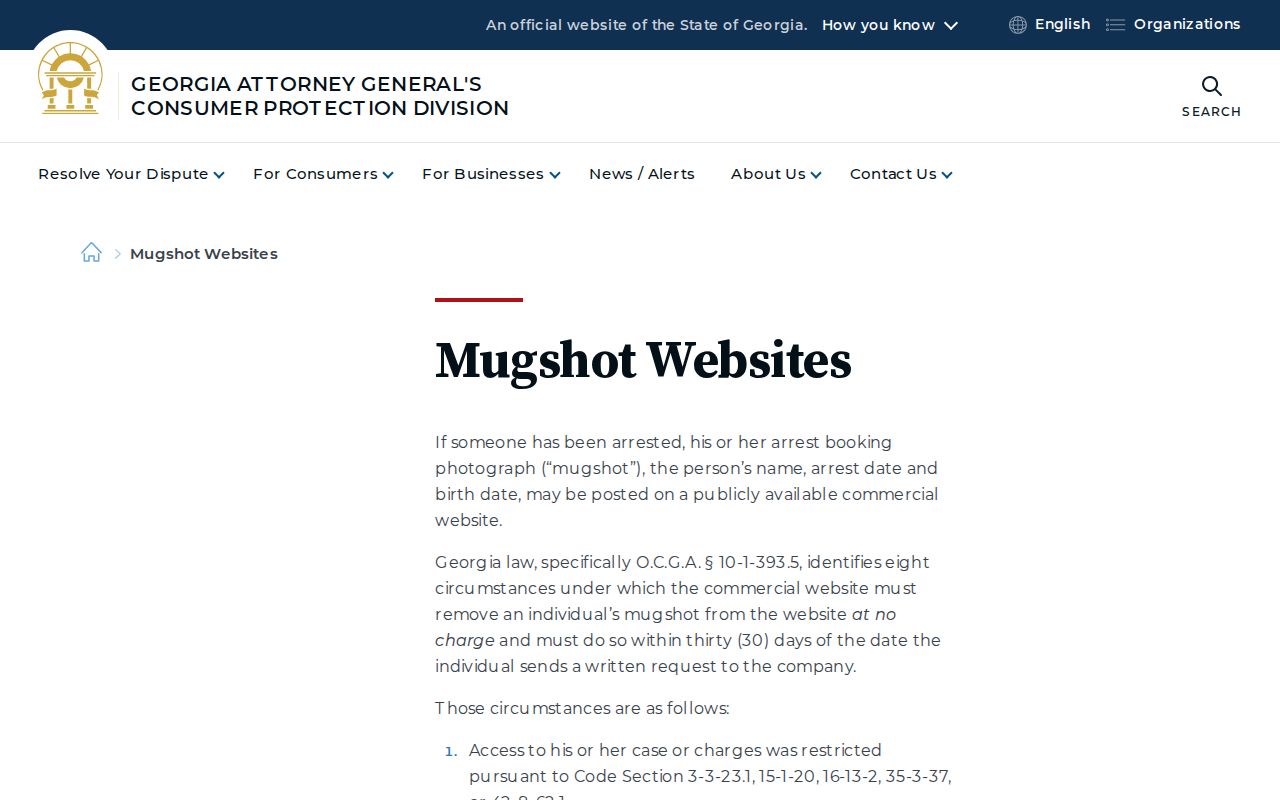
The official consumer guidance gives the qualifying removal framework. It does not turn a later release into proof that the original booking record was false.
The GBI restriction guidance is the source for the date-divided state record path shown below.
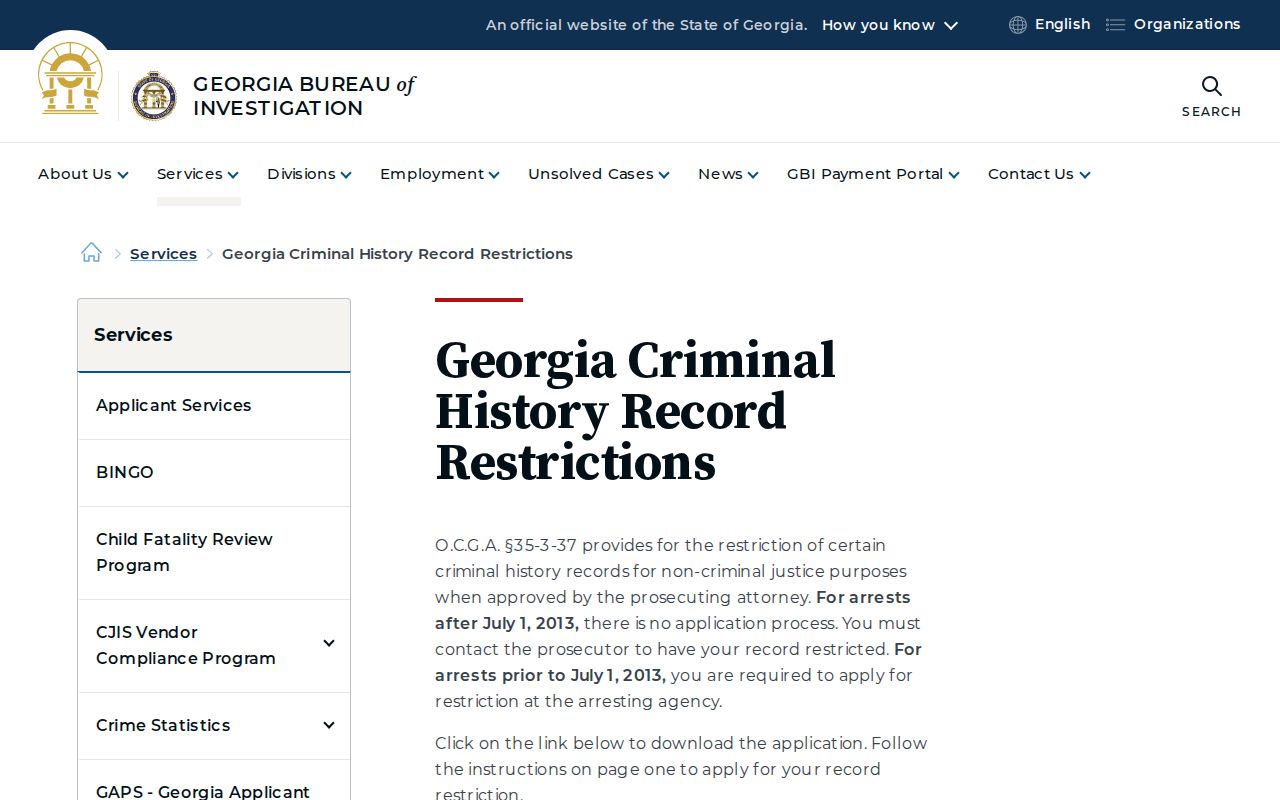
The restriction capture illustrates why record restriction, a commercial removal request, and an agency correction should be described as separate actions.
Finding Lee County Busted Mugshots
Match the search tool to the question. Someone locked up right now shows up under Current Confinements. A recent booking may linger in an admissions view even after release. When an arrest never led to holding, the arrest search or an agency report is the right place to look. One name can surface in several systems, each with its own dates and fields, so check them all before concluding a record is missing.
- Open the official Inmate Confinements page and try Current Confinements for a person believed to be held now.
- Use Last 24 Hour Admits for a rolling recent intake view, or Last 7 Days Admits for a broader window that can include a later release.
- Use the custom admissions range for a known date, keeping each request within the portal’s 31-day limit. Charge and arresting-agency controls can help when the name is uncertain.
- Check the Daily Report Bookings and Arrests tabs, then use the separate Arrest Search when the event may not have produced current custody.
- Move to PeachCourt or the Superior Court clerk for the case outcome, GDC for a sentenced state prisoner, BOP for federal custody, or ICE’s locator for eligible immigration custody.
- Request the booking record and photo from the Sheriff’s Office when the public interface does not cover the date or the person has been released.
A wanted entry is a different matter entirely. The safe, official route for checking and resolving one sits under Wanted Fugitives; never approach or try to detain a listed person yourself.
Lee County Busted Mugshot Sources
Each record answers a different question. Start with official county systems, since they carry the custody stage or the originating record itself. News pages and commercial archives can round out the picture. But they lag, pick and choose, or get current custody flat wrong. A photo on some secondary page will never stand in for a Lee County booking card or a court outcome.
| Channel | Photo? | Status and access |
|---|---|---|
| Citizen Connect Inmate Confinements | Yes, on observed live cards | Official county-linked roster and admission search for current, 24-hour, seven-day, and custom windows. |
| Daily Report and Arrest Search | Not promised | Official arrest and booking activity views. Arrests and bookings are separate record types. |
| Sheriff records request | Request the existing photo | Official fallback for a named booking, with the statutory affirmation and lawful fee process. |
| Georgia Department of Corrections | When available | Official state offender query for people in the GDC system after transfer or sentence. |
| PeachCourt and court files | Not a booking-photo channel | Official path for docket events and disposition, not a jail roster. |
| BOP and ICE locators | No public mugshot field | Federal and immigration custody paths, each covering a different population. |
| Lee County Ledger and WALB | Story-specific | Secondary local reporting. Coverage is selective and not a complete arrest list. |
| Busted Newspaper Lee County | Publisher displays photos | Unofficial county landing page. Verify every entry against the sheriff and court. |
| Recently Booked Lee | Publisher displays photos | Unofficial page advertising a recent window. Its stated coverage is not a county guarantee. |
| Mugshots.com Lee County | Publisher displays photos | Historical or irregular archive observed in research, not proof of current jail status. Its direct link appears on Arrest News. |
| The Georgia Gazette Lee | Publisher displays photos | Unofficial county section with current-looking entries that still require official verification. Its direct link appears on Arrest News. |
The official Inmate Confinements interface is the source for the following roster view.
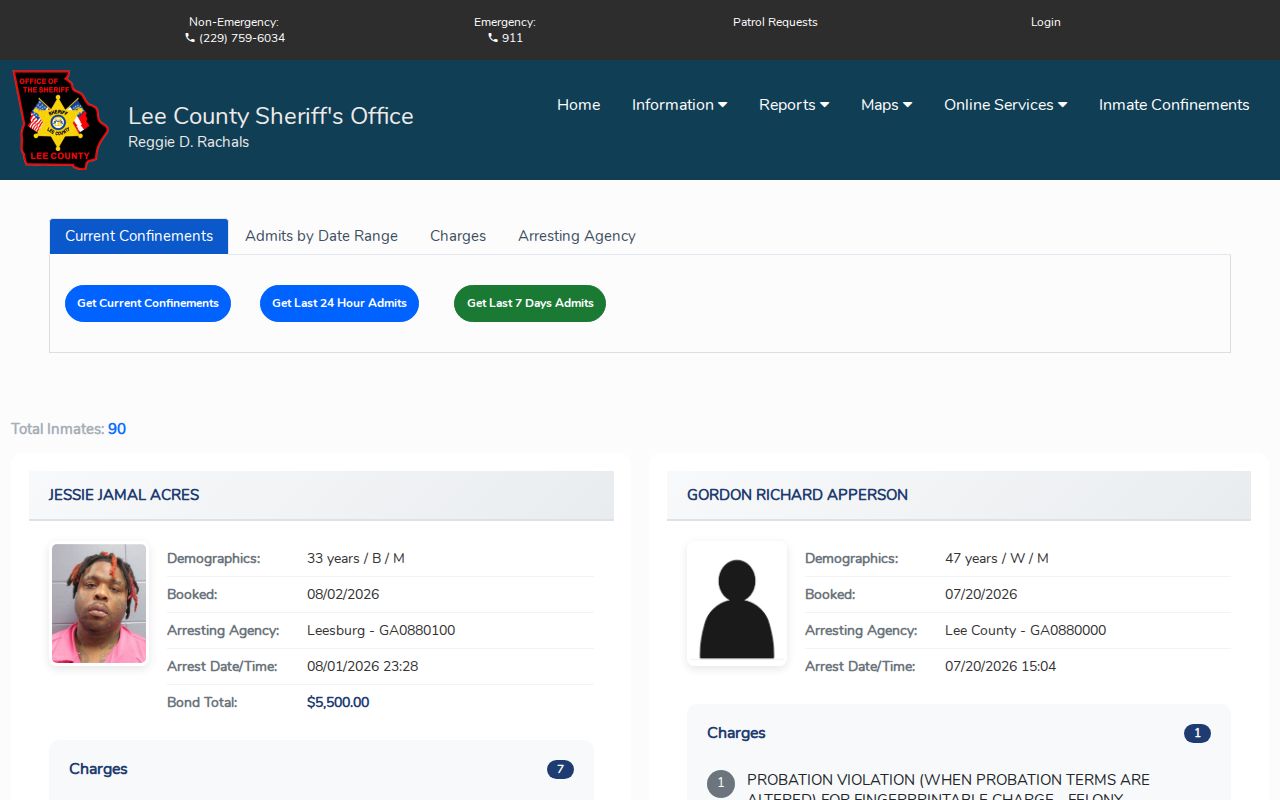
The official interface screenshot shows the source hierarchy clearly: the county-linked search offers custody and admission controls, while unofficial pages should remain secondary.
Busted and Booked: Lee County Roster
The Inmate Confinements interface is the working Lee County roster. Hit "Get Current Confinements" for people held now. "Get Last 24 Hour Admits" opens a rolling one-day window. "Get Last 7 Days Admits" reaches a full week back and can catch someone already released. The custom date control takes a start and end date, with one cap: each range must stay within 31 days.
Charge search takes free text like DUI. Arresting Agency works from a dropdown. Result cards carry the booking photo, booking number and name, age, race, sex, booked date and time, arresting agency, arrest date and time, total bond when set, and charges with docket or bond details where populated. The portal posts no official refresh interval and no online cutoff for records after release.
| Roster control | Use it for |
|---|---|
| Current Confinements | Who appears to be in the Lee County jail now. |
| Last 24 Hour Admits | Recent intake during a rolling 24-hour period, whether or not the person remains held. |
| Last 7 Days Admits | Admissions during the broader rolling period, useful after a weekend or delayed search. |
| Custom date range | A bounded admission lookup with a maximum 31-day range per query. |
| Charge or agency control | A way to narrow results when the exact name is unclear or the arresting agency matters. |
- Choose the custody or admission mode that matches the question.
- Enter the name or use charge, agency, and date controls to narrow the result.
- Compare booking and arrest timestamps, then check the booking number and descriptors before treating a result as a match.
- Use the Sheriff’s Office request path for a released person, an older record, or a field missing from the public card.
Custody now and admission history are two different things. A person can drop off Current Confinements yet still appear in a seven-day or custom admission result. That shift marks a custody transition. It means nothing more.
How Lee County Booking Views Split
Lee County’s official web system separates Current Confinements, admissions by date, Arrest Search, and the Daily Report. That breadth helps answer precise questions, but it also creates a terminology trap. An admission is an intake event. A current confinement is a present custody view. An arrest report records an enforcement event, and the two events can occur at different times or produce different public results.
The Daily Report combines incidents, arrests, accidents, bookings, Most Wanted, and missing-person tabs. During the August 16, 2026 research check, its heading showed August 14 to 15 while dynamic booking content extended through August 16. Read each returned item’s timestamp instead of relying only on the heading. The page’s warning about a delay of up to 72 hours applies to incident and accident reports, not to a sourced booking delay.
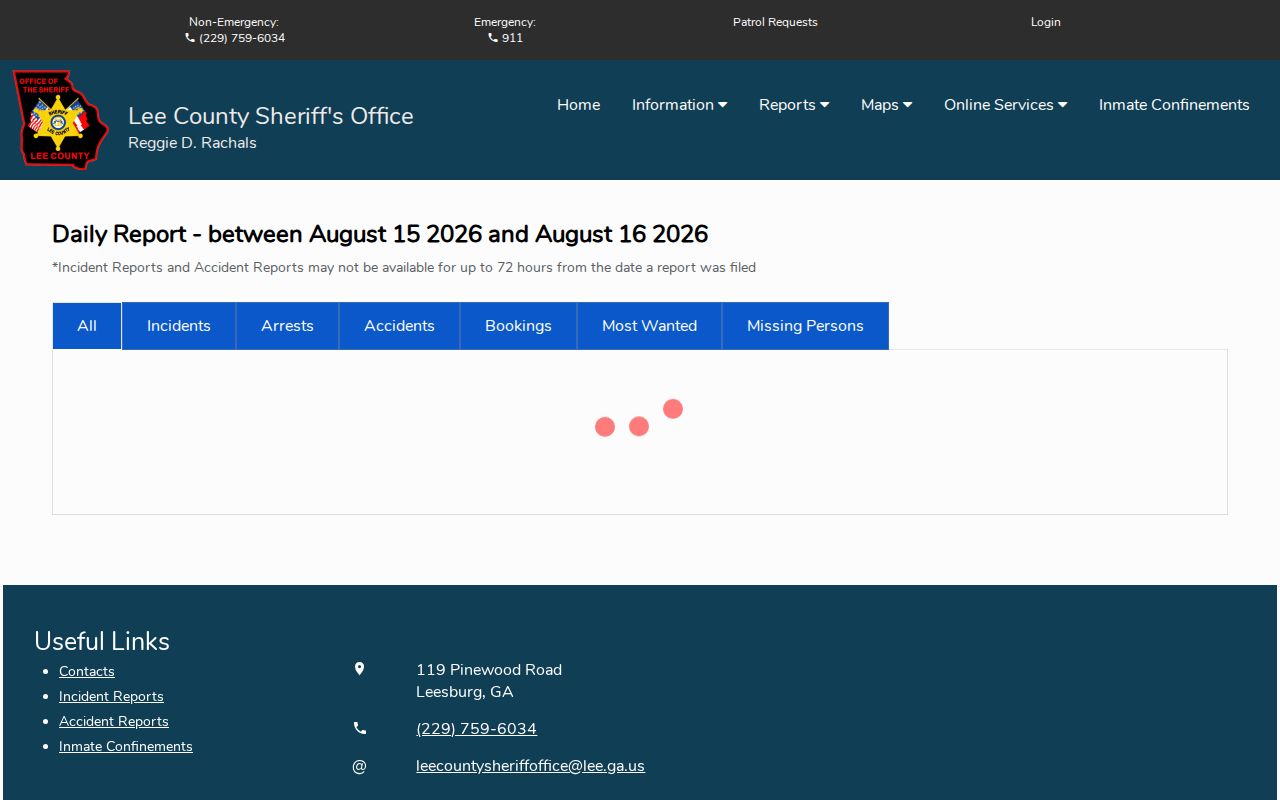
The Daily Report capture documents why the arrest and booking tabs should not be collapsed into one feed. The official pages are related, but they are not interchangeable.
Busted Last Night: Lee County Bookings
Want the people booked in the last day? Use Last 24 Hour Admits. It rolls forward continuously, so the list never resets at midnight as you might expect. Last 7 Days Admits widens the window across several days. A custom admissions search stretches further still. It covers up to 31 days in one query. One caveat applies. The county has not said how far back the underlying system actually keeps its data.
Feed timing note. A booking shows up after intake, not during it. Someone can also be released before you check Current Confinements later on. Read the event timestamp and think of the feed as a public interface rather than a real-time guarantee.
The Daily Report Bookings tab gives another chronological view. The separate Arrests tab and Arrest Search are useful when an enforcement event did not lead to continued jail custody. The arrest form accepts a custom date range, but its shell does not promise a photo, a refresh cadence, or an archive cutoff. Weekly Ledger reporting can preserve context after an official feed changes, yet it remains selective journalism.
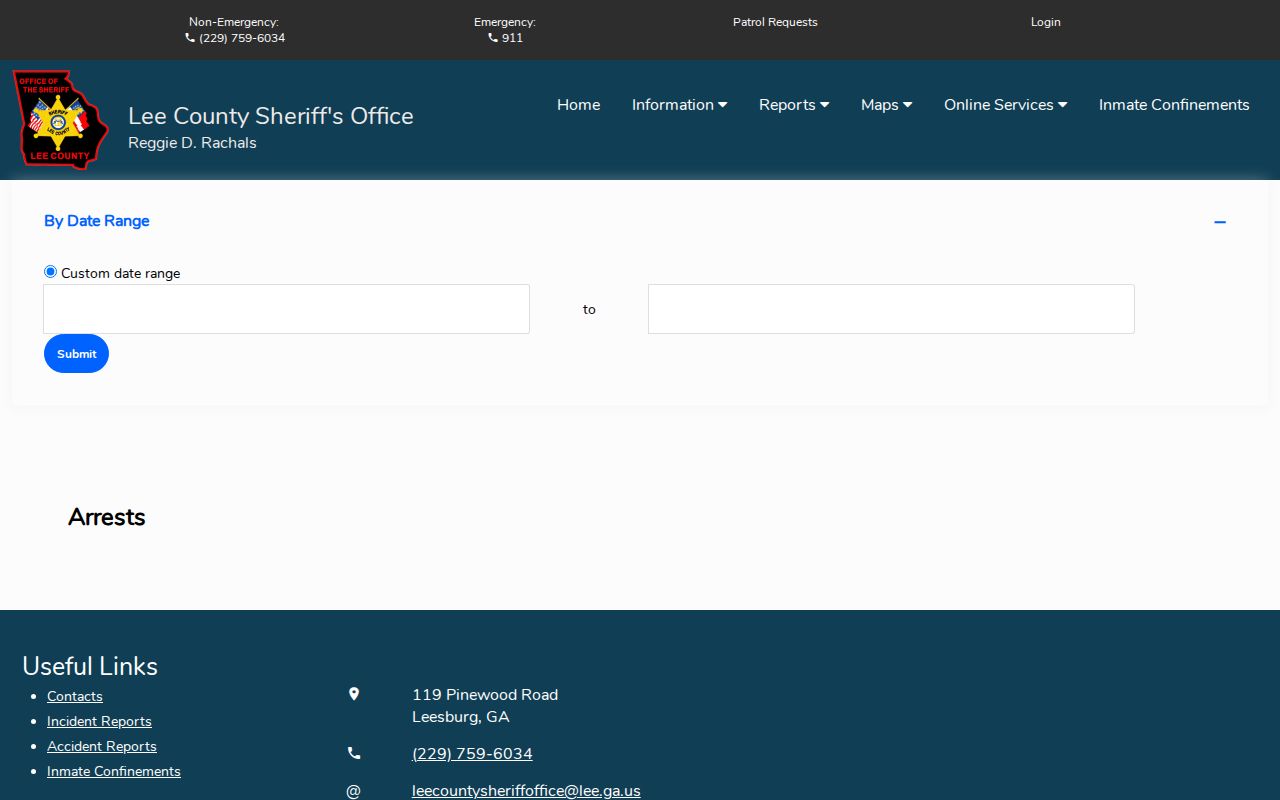
The arrest-search form is a separate official path. It should not inherit every field or photo assumption from the jail roster.
What Lee County Booking Photos Show Online
Live Lee County confinement cards display photographs. That is the documented photo policy for the interface. It does not mean every booking gets an image. Nor does it mean every person stays visible after release. A missing photo can stem from upload scope, a legal restriction, plain timing, or a card that simply lacks that field.
The public card makes no promise of a court date or a final facility entry. Keep your labels straight. A state offender photo is not a Lee County mugshot. A GDC image comes from a later state-corrections stage. A news photo might be an agency-supplied wanted picture, a scene image, or a file image. Name the source and the custody stage. That habit keeps distinct records from collapsing into one photograph.
Observed is not guaranteed. A live card displaying a photo is a supportable statement. Claiming every booking receives a photo immediately is not.
Georgia's § 35-1-19 still governs how booking photographs are requested and transferred. When a result truly matters, check the county-linked interface directly. A formal request should identify the exact booking. Never assume an image sits in every public view.
Georgia DOC Offender Photos
The Georgia Department of Corrections offender query covers the state-corrections slice. It does not cover everyone recently arrested in Lee County. Someone awaiting a county court appearance normally appears in Citizen Connect. Someone sentenced and transferred to GDC appears in the state query. So a transfer can make a county roster search look empty. The case has not vanished.
GDC supports searches by name, descriptive details, GDC identification number, and case number. Its FAQ suggests typing the first four letters of a surname with the "All offenders" option to sharpen a name search. A unique GDC ID or case number works best when you have one. A profile shows a photo once one is uploaded. Still, GDC warns that photographs may be unavailable. No image does not mean no offender record.
| GDC search route | Best use |
|---|---|
| Name and descriptive details | Begin a broad state search, then compare case and identifying information. |
| GDC identification number | Use the unique state identifier when known. |
| Case number | Connect the state record to a known judicial file. |
| GDC photo | State offender identification when available, not necessarily the county intake image. |
If the query does not answer a records question, use GDC’s open-records process with the full name, GDC ID if known, and a transfer or date range. GDC’s research facts state an initial response within three business days, a ten-cent nonmedical copying rate, and search or redaction labor at the lowest-paid qualified employee’s hourly rate. Those charges and exemptions are separate from Lee County’s local request rules.
The official GDC query is the source for the following state-corrections view.
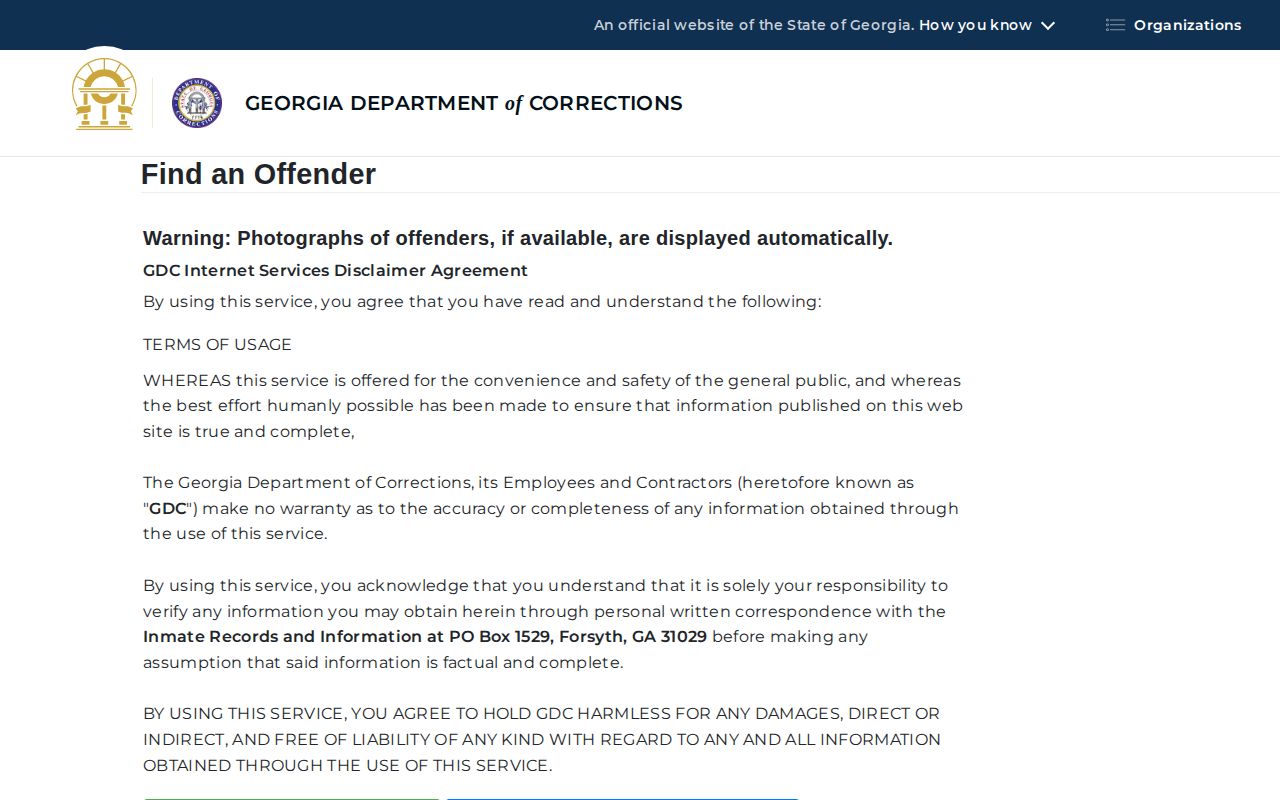
The state query capture shows why GDC is a transfer and sentence channel rather than a replacement for the Lee County jail roster.
Busted, Booked, and Released
Custody state decides where a result is most likely to show up. Match the system to the person's current stage. Then turn to the court record for the legal outcome.
| Custody stage | Primary record path | What the result means |
|---|---|---|
| Just admitted | Last 24 Hour Admits and Daily Report Bookings | A recent intake may be visible even if release follows soon after. |
| Currently held locally | Current Confinements | The person appears in the live local custody view at the time of the search. |
| Released from Lee County jail | Seven-day or custom admissions, Arrest Search, court file, or records request | Dropping off the current roster does not erase the booking record or prove a disposition. |
| Sentenced and transferred to GDC | GDC offender query and GDC records route | A state-corrections record, with a different photo and custody context. |
| Federal custody | BOP inmate locator | A federal locator result, which has no public mugshot field. |
| Immigration custody | ICE Online Detainee Locator System | An immigration-custody result with its own coverage limits, also without a public mugshot field. |
When Lee County Court Takes Over
Booking data freezes what was recorded at intake. Court data carries the case forward. Georgia's official e-access route leads to PeachCourt for Lee Superior Court records, and it requires an account. Match the person through case details, then read the filed counts, orders, hearing entries, and disposition. The Superior Court clerk is your local fallback for in-person help and copies.
Lee Magistrate Court handles warrant applications, first appearances, bond, preliminary proceedings, extradition, and committal functions. Under Georgia's Uniform Magistrate Court Rule 25.1, judicial presentation must happen no later than 48 hours after a warrantless arrest, or 72 hours after an arrest under warrant, unless bond has been made. Those deadlines govern court presentation only. They say nothing about roster uploads or release timing.
Coverage is not the whole story. News items and booking cards carry early labels. Counts can change. They may be amended or dropped as a case moves through court.
What does a booking card leave out? It may not show the final charging document, court date, medical information, confidential material, or disposition. Use the court clerk or docket for those records.

The court gateway capture marks the handoff from jail intake data to the judicial record. A booking photo cannot answer what happened in court.
Lee County App and Alerts
There is no verified sheriff's mobile app for Lee County, Georgia. Citizen Connect fills that gap through any mobile browser. Its hub offers alerts, reports, missing-person tools, patrol requests, inmate confinements, and a wanted tab. Be careful with app-store listings for other Lee Counties. One belongs to Tupelo, Mississippi, and none of them belong to Georgia.
No alert is guaranteed for each booking, release, or warrant. For custody notifications, Georgia's statewide VINE program stands apart from the public roster. State prison is different again. There, Georgia V.I.P. serves eligible registered victims once the person enters the GDC system.
| Notification channel | Custody stage | Limit |
|---|---|---|
| VINElink | Participating Georgia jail status changes | Verify that the Lee County record is covered before promising an alert. |
| Georgia V.I.P. | GDC incarceration and release information | Uses a case number or GDC ID and serves a different state-corrections stage. |
| Citizen Connect Alerts Archive | County web alerts | Not a guaranteed booking or release notification service. |
Smithville Busted Booking Path
Smithville's police department and the county jail keep separate records. The city posts no person-level arrest log. No daily bulletin, blotter, or mugshot feed exists. City Hall houses the police department, but anyone jailed after a Smithville arrest lands in the Lee County Criminal Justice Center. That makes a city incident report and a county booking request two different asks.
Older sources mislead here. A 2014 news story covered a stretch when Smithville's department had disbanded and the sheriff ran its operations. Ledger reporting from 2023 and 2024 points to a rebuilt department after that. Trust current city contacts first. A county-wide path proves nothing about whether every city encounter ends in a booking.
The Smithville Busted Mugshots page carries the city contacts and monthly Ledger context. Its route is simple. Go to the city department for an incident record. Use Citizen Connect for a county booking question. The court file settles the outcome.
Lee County Open Records Fees
Lee County lays out its fees plainly. Letter and legal copies run ten cents a page. Other media get billed at actual reproduction cost. Labor for search, retrieval, redaction, or supervised inspection is billed at the hourly rate of the lowest-paid qualified full-time employee, and the first 15 minutes are free. One more thing. A special statutory fee can control, and no separate Lee booking-photo fee is published.
| Request item | Published Lee County treatment |
|---|---|
| Letter or legal copy | $0.10 per page. |
| Other media | Actual reproduction expense. |
| Search, retrieval, redaction, or inspection labor | Lowest-paid qualified full-time employee’s hourly rate after the first 15 minutes free. |
| Booking-photo fee | No separate local price published. Ask for an estimate before incurring costs. |
| Response timing | Georgia’s normal three-business-day response rule applies to available records, with a written timeline when immediate production is not possible. |
The county's general Open Records Clerk routes requests, but sheriff records belong with the Sheriff's Office. Payment is due on receipt under the county page. A response within three business days is not a promise that a complex search, a redaction review, or a photo request arrives in three days.
What if the price is unknown? Request a written estimate plus the statutory basis for any special charge. Never assume an unpublished photo fee means free.
From Lee County Jail to GDC
Lee County's Criminal Justice Center holds people awaiting court, certain locally sentenced misdemeanor prisoners, and those awaiting transfer. A state sentence changes everything. Once transfer happens, GDC's offender query and Georgia V.I.P. take over. Citizen Connect then stops showing the full picture of the person's state custody.
| Event | Record and notification route |
|---|---|
| County admission | Citizen Connect admissions and current-confinement views; a live card may display a photo. |
| County release | Current roster visibility can change; admission history, court records, or a request may still answer the record question. |
| State transfer | GDC offender query and GDC records request, with a state offender photo when available. |
| State-prison notification | Georgia V.I.P. for its eligible registered-victim service, not a county booking feed. |
Georgia's VINE program offers phone, web, and app alerts for jail status changes. Check that it covers the specific Lee County record you need. One caution applies. A notification service is not a mugshot source. It never replaces the court disposition.
Federal Lee County Arrest Records
The Bureau of Prisons locator covers federal inmates from 1982 forward and supports federal identification numbers or a name search with age, race, and sex. It identifies location and release information but has no public photograph field. A Lee County arrest appears in BOP only after the person enters the BOP record system. A federal hold alone does not create a BOP result.
The ICE Online Detainee Locator System covers current ICE custody and certain people held by CBP longer than 48 hours. Its search uses an A-number and country of birth or exact name and country of birth, with date of birth optional. It does not show people under 18 and does not display mugshots. The U.S. Marshals Service also does not offer a general public prisoner-photo locator. These are different systems from the Lee County jail.
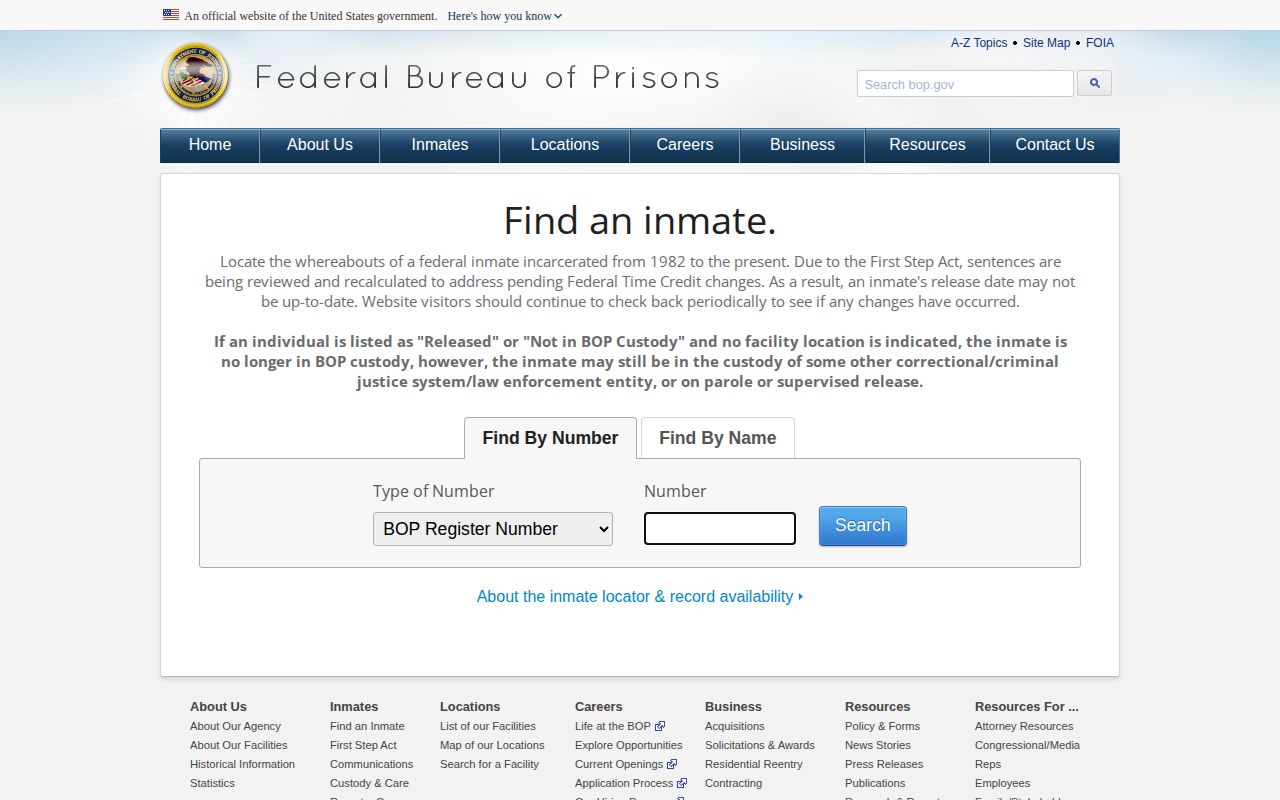
The federal locator capture makes the photo limitation visible. A failed local roster search should not be treated as proof of federal or immigration custody, and a federal locator result should not be described as a county mugshot.
Lee County Booking Record Retention
The Georgia Archives local schedule sets minimum retention periods for record series. Jail booking records under LG-19-060 are retained for ten years after release. Jail registers under LG-19-061 are retained for ten years after the last entry. Daily incarceration lists have a one-year classification, arrest and booking summary statistics five years, and inmate case files ten years after release.
Retention is not the same as web visibility. Citizen Connect publishes no archive horizon or post-release display rule. A photograph tied to a retained booking file may still be subject to legal limits, redaction, or a separate access decision. For an older Lee County booking, ask the Sheriff’s Office for the name, date, booking number, and whether the record remains with the jail or county storage. Ask the Superior Court clerk for court material because judicial records follow different schedules.
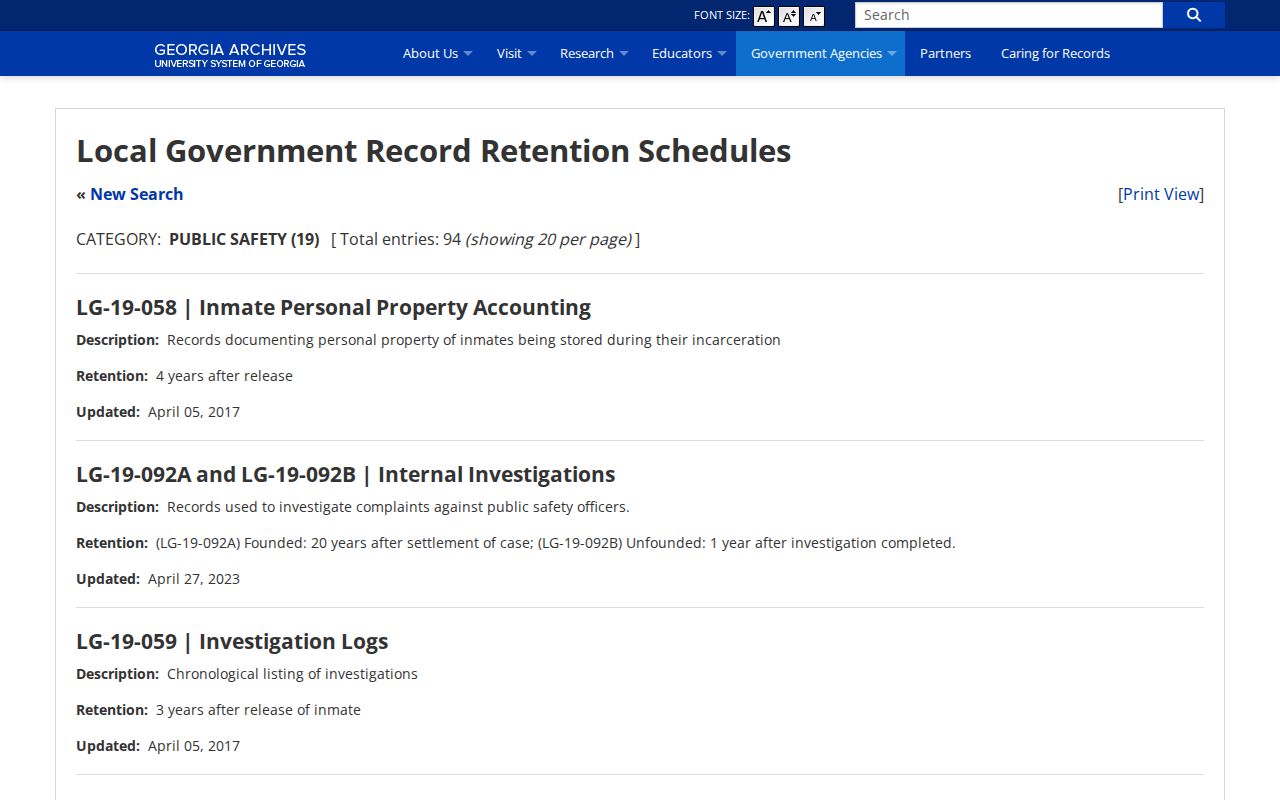
The schedule capture supports minimum retention classifications, not a promise that a booking card or photograph stays online for ten years. Historical Ledger issues can add narrative context, but they remain selective secondary reporting.
Busted Mugshots by Lee County City
Two incorporated cities sit inside Lee County. A city police department can generate its own arrest or incident paperwork. Yet the county sheriff holds the booking record and photo whenever someone enters the local jail. News stories name a city, but that tells you little. Match the agency, the date, and the stage of custody before drawing conclusions about where a person was held.
- Leesburg Busted Mugshots: the county seat, with a city police department serving Leesburg and the Lee County School System. No verified city person-level blotter was found, so Citizen Connect and the county records route bridge the booking question.
- Smithville Busted Mugshots: a smaller municipality with a current police department, no verified online person-level arrest feed, and recurring narrative activity summaries in the Lee County Ledger.
Need broader coverage? Turn to Arrest News for the full county media path. Local reporting helps you spot when and where something happened. For custody details and how a case resolved, the roster, the records custodian, and the court file beat the newsroom every time.